North American Legal Monthly
Legal Curiosities: What Happened in U.S. Law in March?
Page 1
H-1B "Wage Hike Storm": Minimum Wage Threshold Doubles, Low-Wage Positions in Jeopardy
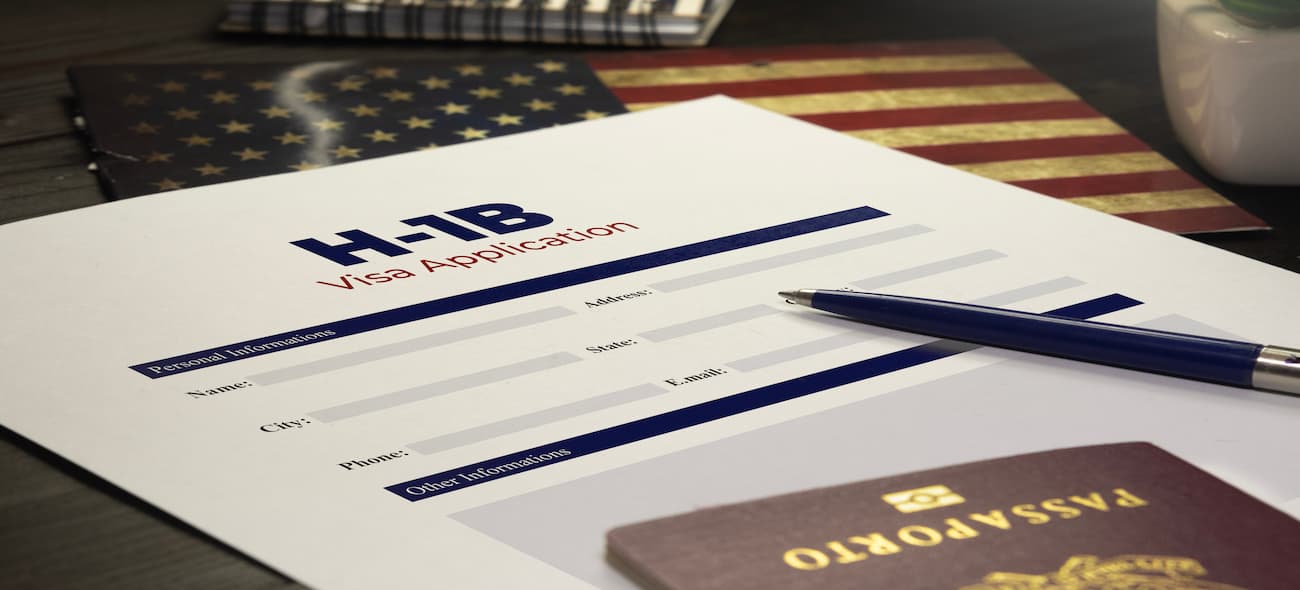
On March 27, the Department of Labor (DOL) formally announced a proposed new rule planning to raise the prevailing wage standards for H-1B, E-3, and PERM programs. The core of this adjustment lies in increasing the industry percentiles corresponding to each wage level: for instance, Level 1 positions will be raised from the current 17th percentile to the 34th percentile, effectively aligning them directly with the current Level 2 standard. Meanwhile, Level 2 will increase to 52%, Level 3 to 70%, and Level 4 to 88%. This change means that employers will need to offer significantly higher salaries in the future to meet application requirements, visibly driving up labor costs. Notably, the Trump administration proposed a highly similar wage rule near the end of its first term, which ultimately failed to take effect due to court challenges. This rule is currently in the public comment period and has not yet officially taken effect; it is expected to be implemented no earlier than this autumn, so those participating in this year's H-1B lottery will not be affected.

ICE Enters 14 Airports: Escalating Security Pressure Draws Wide Attention
On March 23, due to a partial federal government shutdown causing personnel shortages at the Transportation Security Administration (TSA), airport security wait times in multiple locations have exceeded four hours. The Department of Homeland Security (DHS) announced that Immigration and Customs Enforcement (ICE) agents have been deployed to 14 major airports across the United States to assist with security screening and crowd management. The White House Border Affairs Director stated that ICE will undertake auxiliary functions such as monitoring entry/exit points, maintaining order, and verifying identities, while maintaining its law enforcement deterrence against transnational crime. President Trump also stated that if the situation does not improve, he does not rule out deploying the National Guard. Although the government claims this move will help improve efficiency, some civil rights organizations have expressed concern over law enforcement personnel participating in civilian security checks.

Critical Battle for Birthright Citizenship: Supreme Court to Hear Oral Arguments
The Supreme Court announced that it will hold oral arguments on a "birthright citizenship" case on April 1, marking a critical juncture in the legal battle surrounding this policy.
The controversy stems from an executive order signed by President Trump in January last year. The policy proposes that if a child is born in the U.S. while the mother holds only a temporary legal status (such as student, work, or tourist visas) or is undocumented, and the father is neither a U.S. citizen nor a green card holder, the child will no longer automatically acquire U.S. citizenship. The move quickly triggered multiple lawsuits across the country and eventually escalated to the Supreme Court.
In just one week, more than 47 legal briefs have been submitted to the Supreme Court. The American Bar Association, jointly with 14 state bar associations, issued a direct warning: overturning birthright citizenship could leave 4.2 million children born in the U.S. stranded in a statusless "legal vacuum." According to the procedural schedule, a final ruling is expected around June this year.
H-1B Lottery Concludes: Market Watches for Potential "Second-Round Draw"
On March 31, the FY 2026 H-1B lottery officially came to a close. As results are gradually released, market focus has shifted to whether there will be a "second-round draw" (re-running the lottery with returned quotas) this year.
Industry analysis indicates that under the new weighted lottery system, some applicants attempted to boost their selection odds by raising their wage levels during the registration phase. However, they face a risk of denial during the subsequent filing stage if their job descriptions do not match those wage levels. Concurrently, some overseas applicants may choose to abandon their applications when faced with the actual requirement of paying a $100,000 entry fee, causing quotas to flow back into the pool.
Weighing various factors, a second-round draw is likely this year, with the time window expected to fall between late July and early August. Unselected applicants are advised to map out alternative pathways early to mitigate uncertainties.
DHS Welcomes "Iron Fist" Secretary: Potential New Adjustments to Immigration Policy
On March 24, President Trump suddenly announced the removal of Kristi Noem from her position as Secretary of Homeland Security, appointing Markwayne Mullin from Oklahoma as her successor. This personnel shakeup swiftly drew high attention from both political circles and the immigration sector.
The newly appointed Secretary Mullin was a professional MMA fighter with an undefeated record before building a multi-service regional enterprise from his family's debt-ridden plumbing business. After entering politics, he championed the High-Skilled Immigrants Fairness Act, advocating for the elimination of the 7% country cap on employment-based immigration to allocate visas strictly by priority date. He has also favored tightening H-1B oversight, demanding stricter information disclosure and domestic labor protections. Additionally, his policy inclinations include ramping up site visits and national security background checks. Following the new Secretary's arrival, the direction and actual enforcement intensity of these policies remain to be closely observed.

Page 2
DV Lottery Threshold Tightened Further: Applications Disqualified Without Passport Submission
The U.S. Department of State issued a final rule officially revising the "Diversity Immigrant Visa Program" (DV Lottery) effective April 10, 2026. The new rule explicitly mandates that applicants must provide valid, unexpired passport details and upload a scan of their passport's biographical page when submitting the electronic entry form; otherwise, the application will be deemed invalid. If an applicant qualifies for an exemption, it must be clearly stated in the system.
Furthermore, the rule adjusts form terminology, such as standardizing "gender" to "sex" and replacing "age" with "date of birth" to more accurately reflect data collection. The exact opening date under the new rule has not yet been announced.

New EB-5 Mechanism Implemented: Project Approval Speed Becomes Vital
USCIS announced that starting March 30, it will adjust the allocation and adjudication mechanism for EB-5 investment immigration cases, applicable to I-526 (standalone) and I-526E (regional center) petitions. The new mechanism centers around a "modified First-In, First-Out (FIFO)" approach, capturing market interest.
Per the new guidelines, an I-526E petition must wait until the corresponding project's I-956F is approved before entering the formal adjudication and allocation phase. Additionally, rural category petitions will be prioritized for allocation under FIFO principles, while other categories will only enter processing after rural cases have reached a certain stage of progress.
Furthermore, under the EB-5 Reform and Integrity Act, the EB-5 visa quota sets aside specific reserved allocations: 20% for rural projects, 10% for high-unemployment areas, and 2% for infrastructure projects. In practice, USCIS may establish separate adjudication queues by category to maximize visa utilization efficiency and avoid wasting quotas.
Complete Disclosure of Social Media Handles: U.S. Visa Screening Upgraded Again
On March 25, the Department of State announced that effective March 30, applicants for multiple visa categories—including A-3 and C-3 domestic workers, G-5, H-3 and their dependents, K-1 fiancé(e) visas, as well as Q, R, S, T, and U visas—will be required to undergo an "online information review" when applying at overseas embassies and consulates. Applicants must set their social media accounts to public for official review. Although specific evaluation metrics have not been disclosed, any discovery of inappropriate or sensitive information could trigger more rigorous security checks, causing visa delays or outright denials. This screening mechanism has already been progressively applied to F, M, J, and H-1B visas since 2025. The new expansion will heavily increase the consular review burden, likely tightening visa appointment availability, prolonging overall processing times, and further elevating uncertainty for applicants seeking entry into the U.S.

Citizenship Revoked Over Hidden Felonies? U.S. Digs into the Past to Denaturalize
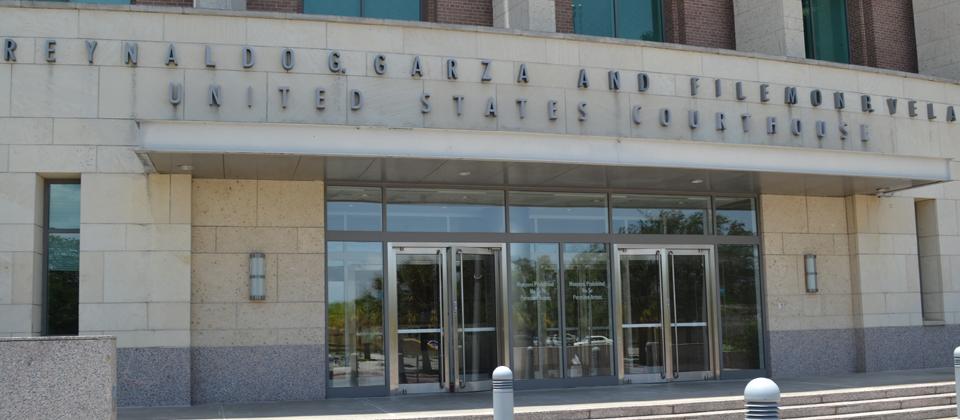
On March 19, USCIS announced that, with its investigative assistance, a federal court formally revoked the U.S. citizenship of a convicted child sex offender in Texas. The U.S. District Court for the Southern District of Texas ruled that the Mexican national deliberately concealed his past commission of child sexual abuse when applying for naturalization in 2010, rendering his citizenship "illegally procured." According to judicial documents, although the man pleaded guilty to the crimes after naturalizing, the court determined that he committed material concealment during the application phase, which stripped him of the required good moral character for naturalization, resulting in the denaturalization ruling.
H-2B Quota Exhausted: Window Closed Early on March 10, Late Submissions Rejected
On March 20, USCIS announced that the statutory cap for the second half of FY 2026 H-2B visas has been reached, with March 10 marking the final receipt date. All cap-subject petitions filed after this date requesting employment start dates between April 1 and October 1 will be rejected automatically.
While the regular cap is exhausted, the avenue for supplementary visas remains open. USCIS has concurrently published the filing timelines for the second and third tranches of supplemental FY 2026 H-2B visas, allowing businesses to submit petitions based on different employment start-date windows.
Page 3
H-1B $100,000 Entry Fee Challenged Again: House Introduces Total Repeal Bill
On March 5, a Democratic member of the House of Representatives introduced the Welcoming International Success Act (WISA), aiming to completely abolish the $100,000 fee threshold imposed on certain H-1B applicants and ban federal funds from being used to enforce related restrictions. Proponents noted that the fee heavily impacts the tech sector and small-to-medium enterprises, threatening to accelerate international talent drain and weaken the U.S. position in the global race for highly skilled workers. Public data shows that the actual number of companies paying the fee falls far short of historical H-1B application volumes, signaling that the policy has failed to effectively expand government revenue and has instead chilled corporate participation, pulling down overall application numbers. The bill is currently in its initial stages and has not yet moved to a congressional vote; its final outcome remains to be seen.
Toronto Downtown Airport Opens U.S. Preclearance: TN and L-1 Pathways Widen
Customs and Border Protection (CBP) announced that starting March 10, 2026, Toronto Billy Bishop City Airport (YTZ) has officially launched U.S. Preclearance services. From this date onward, travelers flying to the U.S. via YTZ can complete U.S. customs and immigration inspections while still on Canadian soil, exempting them from further clearance upon arrival in the U.S.
A major highlight of this expansion is that Canadian citizens can now apply for TN and L-1 visa statuses directly through the preclearance process at YTZ. Previously, due to a lack of facilities, travelers could only apply for TN status upon arrival in the U.S. and were entirely unable to process L-1 applications at this airport. Applicants planning to seek TN or L-1 status are advised to thoroughly prepare their documentation ahead of travel to ensure a smooth on-site inspection.

Healthcare Sector May See Relief: Proposal Aims to Carve Out Exemption for H-1B $100,000 Fee
On March 17, a bipartisan group of House lawmakers introduced the H-1Bs for Physicians and the Healthcare Workforce Act. The bill proposes to keep the $100,000 H-1B fee policy intact while carving out an exemption mechanism for the healthcare sector, allowing doctors and specific medical practitioners to bypass the payment.
The proposal comes against the backdrop of an intensifying healthcare staffing shortage across the United States. Data indicates that by 2036, the U.S. could face a shortage of up to 86,000 physicians, with rural and underserved areas relying particularly heavily on international medical talent. The bill aims to maintain the policy's broader regulatory constraints while averting critical damage to a vital industry. The proposal is currently in its infancy and has not yet reached the House floor for a vote; its final trajectory remains to be monitored.

PERM Processing Times Continue to Stretch, Current Progress Still Stuck in 2024
The Department of Labor (DOL) released its latest processing update, showing that the overall timeline for PERM and prevailing wage determinations (PWD) continues to lengthen. As of March 5, 2026, regular PERM processing has only advanced to cases submitted in October 2024 or earlier, while audited cases are being processed up to June 2025 or earlier. Reconsideration requests are hovering around cases filed before September 2025, reflecting a pronounced slowdown across the board. In terms of wage determinations, the DOL is currently handling PWD applications submitted in December 2025 (covering both OEWS and non-OEWS data) and reviewing wage appeal requests from November 2025. Meanwhile, PERM Certifying Officer reviews are also stalled at December 2025. The current pace means the entire PERM cycle now stretches past a full year, injecting higher uncertainty into corporate workforce and immigration planning. Employers and applicants need to strategize well in advance to navigate these prolonged windows.

Page 4
DHS & CBP Disclose Latest Data: Border Achieves "Zero Undocumented Immigrant" Releases for Ten Straight Months
On March 20, DHS and CBP jointly released their latest enforcement metrics, showing that as of February 2026, the U.S. has achieved its 10th consecutive month of "zero undocumented immigrant releases into the interior," keeping border enforcement intensity at a historical high.
In terms of combating transnational crime, CBP seized a total of 79,609 pounds of narcotics in February, hitting its highest level since October 2021. Concurrently, CBP stepped up trade and supply chain enforcement, processing $262 billion in import cargo value during February while intercepting multiple shipments suspected of forced labor violations and counterfeit goods. The data underscores an ongoing surge in border enforcement, though its long-term effects remain to be seen.

IRS Ruled in Violation for Sharing Tax Data: Involved Over 40,000 Unauthorized Disclosures
A federal court recently handed down a ruling finding that the Internal Revenue Service (IRS) violated Section 6103 of the Internal Revenue Code over the past several years by sharing taxpayer tax information with Immigration and Customs Enforcement (ICE) without proper authorization.
According to disclosures by the court, the IRS systematically supplied ICE with sensitive taxpayer data—including income records, identity details, and residential addresses—a total of 42,695 times. The court pointed out that these actions failed to meet the statutory prerequisites for information disclosure, constituting a systemic compliance violation. Under current law, except for specific criminal investigations backed by legal authorization, taxpayer tax information is strictly confidential and prohibited from being shared with other agencies.
The incident has sparked public debate over the boundaries of government data utilization. Currently, multiple human rights organizations have stated they will pursue legal action to demand a deeper probe into the compliance of data-sharing frameworks. Meanwhile, several members of Congress have proposed holding hearings to review data usage and sharing protocols between the IRS and other federal agencies.